Headframes and Ore Bins
Part of my larger exploration, Abandoned Mine Lands of the West, Headframes and Ore Bins delves into the quiet poetry of industrial decay. These structures—headframes reaching skyward like skeletal spires, and ore bins crouched, heavy with forgotten purpose—tell stories etched into rust and wood. They are monuments to labor and loss, to ambition carved from rock, and the landscapes that both bore witness and bore the weight.
This series seeks to capture the delicate tension between human ingenuity and nature’s reclamation: where iron corrodes, wood splinters, and silence settles into spaces once alive with movement. Headframes and Ore Bins invites the viewer to contemplate what remains—both tangible and intangible—when the earth exhales and industry becomes memory.
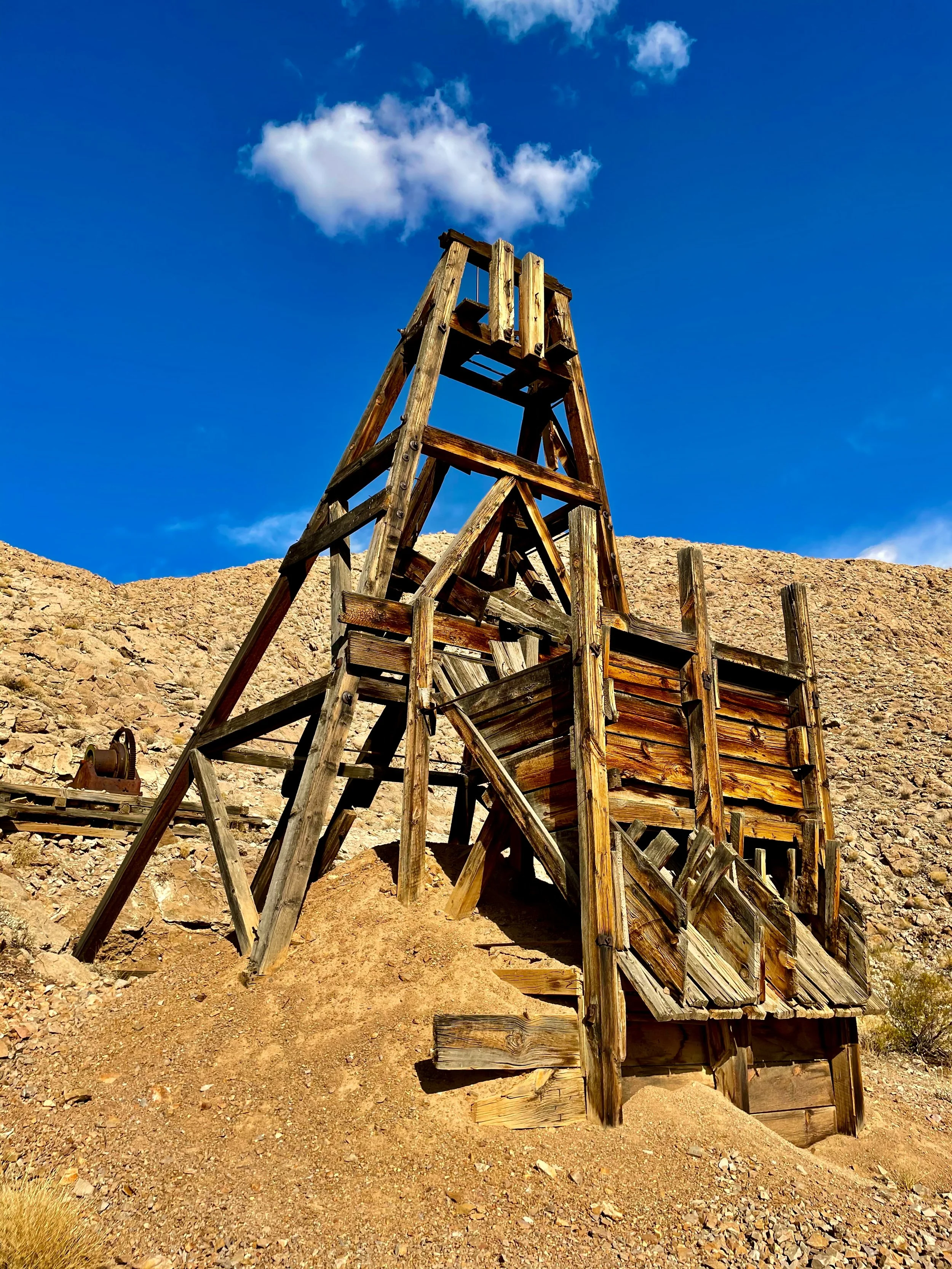
One of the headframes of the War Eagle Mine in Tecopa, California. Standing here since the 1920s this incline shaft accessed the rich multi-metal ore body below. An integrated ore bin allowed rapid loading of the narrow gauge mine railroad that connected the various shafts and adits of this large mining complex.
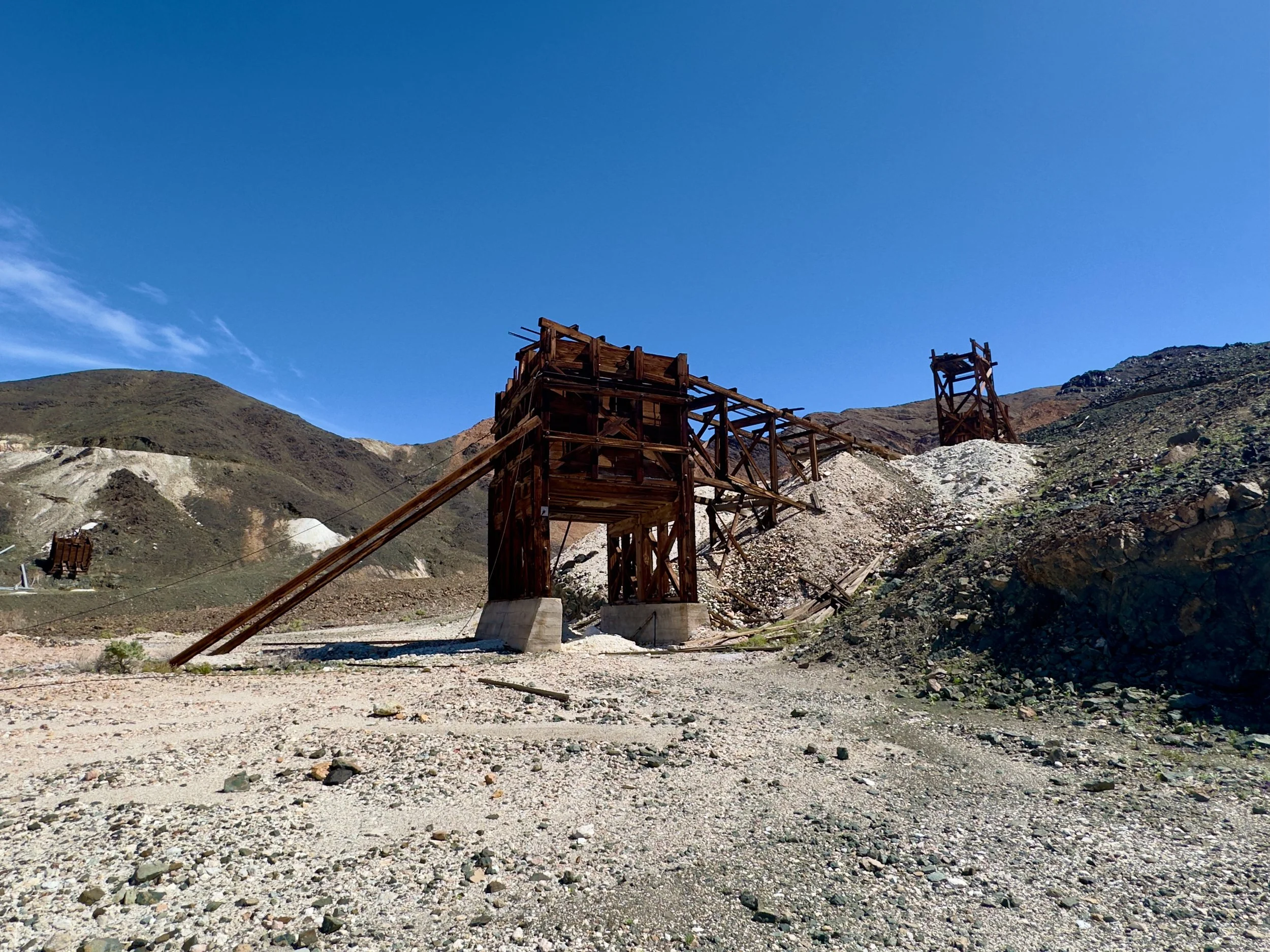
The ore bin and headframe of the Ibex Mine (not to be confused with the Ibex Arcturus Mine nearby) in the Saratoga Springs region of Death Valley National Park. The Ibex mined soapstone, the ore that talc comes from here until 1959 when the mine was finally idled.
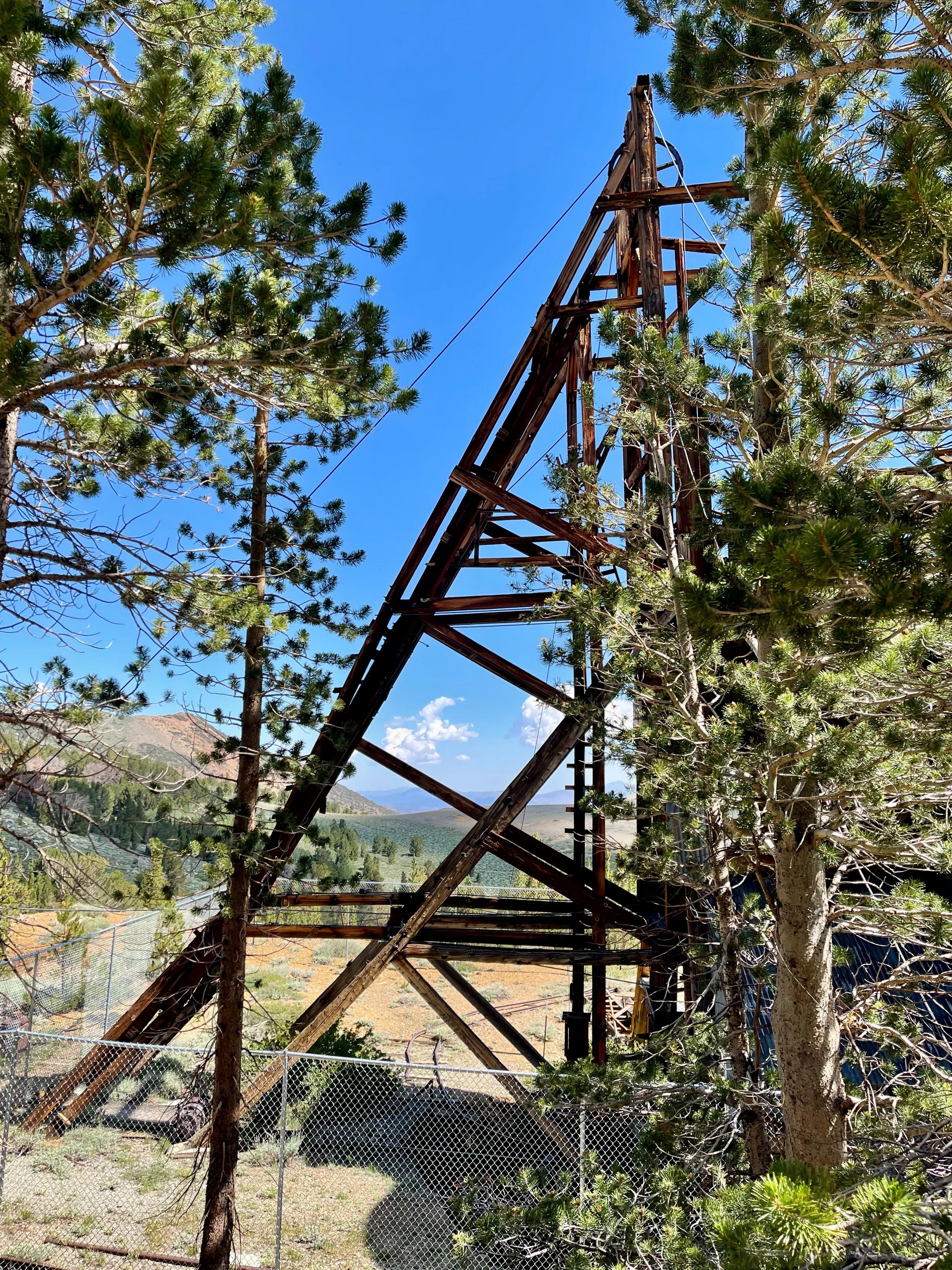
The headframe of the Log Cabin Mine, located at an elevation of 9,600 feet above sea level, sits defiantly against the harsh winters of the Sierra Nevada. The Log Cabin sits high above Lee Vining, California and was once the most valuable gold producer in the state. It was idled, along with all other gold mines, in 1942 by order of President Roosevelt to support the efforts of World War 2. It was maintained until 1968 when it was finally abandoned leaving many millions of gold in the ground.
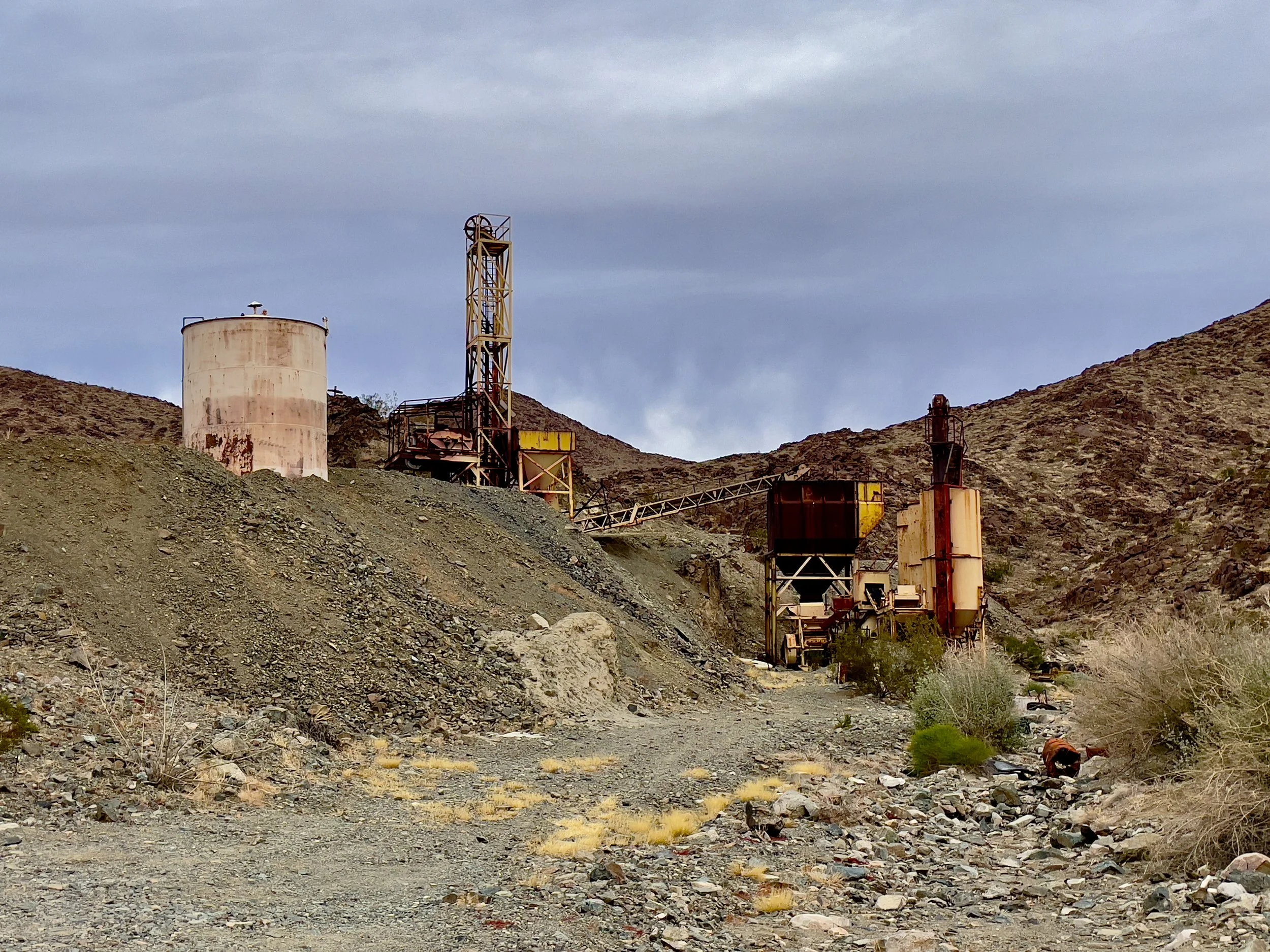
Save for the consistent scavenging of artifacts by visitors, the Mission Mine in the Old Dale district should last for quite a while with the modern steel equipment. This was a gold mine that operated just outside Joshua Tree National Park until the 1980s. Since then, time and vandals have slowly picked apart the site. Bullet holes riddle the equipment and monsoon floods have slowly carved apart the site. The headframe, to the left, sits atop a 700 foot deep shaft and the conveyor belts feed the trailer mounted ore bin and integrated mill.